A Deep-Sea Time Capsule: Two Ming Dynasty Shipwrecks and What They Reveal About the Maritime Silk Road

When Chinese archaeologists descended to 1,500 metres below the surface of the South China Sea in October 2022, they were not just exploring the ocean floor. They were opening a time capsule that had been sealed for over 500 years, preserved in the crushing darkness where sunlight never reaches.

What they found has reshaped parts of what we thought we knew about Ming Dynasty maritime trade. Two merchant vessels, their hulls remarkably intact despite centuries under water, contained more than 900 artefacts that tell a compelling story of globalisation long before the word existed.

A Depth Few Reach

The two shipwrecks lie approximately 150 kilometres south-east of Sanya in Hainan Province, separated by 22 kilometres on the north-west continental slope. At 1.5 kilometres deep (roughly 5,000 feet), this discovery represents one of the deepest archaeological excavations ever conducted in Chinese waters. For perspective, that is about three times the depth limit of most recreational scuba diving.

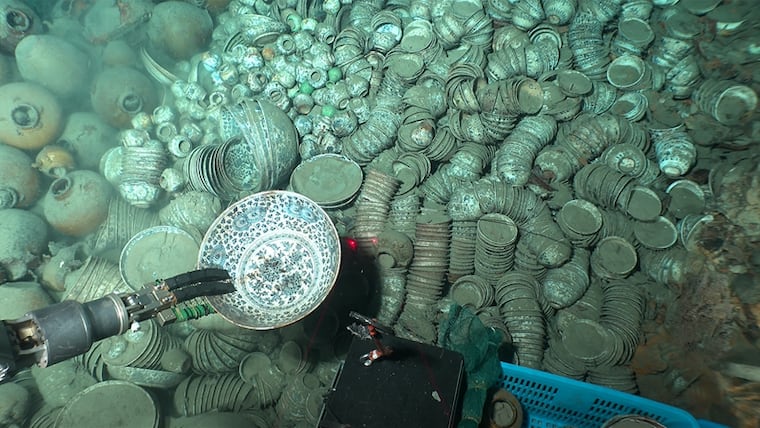
The technical achievement alone is remarkable. Chinese archaeologists deployed crewed and uncrewed submersibles fitted with flexible manipulator arms, 3D laser scanners and high-definition cameras. Working at this depth demands extraordinary precision. Every movement must be planned. Each artefact recovery is as much a triumph of engineering as it is of archaeology. Three separate investigation phases were carried out to document and recover items from both sites with care.

Two Vessels, Two Stories

The larger of the two wrecks, designated Shipwreck No. 1, measures approximately 37 metres long and 11 metres wide. Dating to the reign of the Zhengde Emperor (1506-1521), this vessel was clearly heading out to sea when disaster struck. Archaeologists recovered 890 objects from the site, though initial surveys suggest more than 10,000 items remain scattered across the seabed.

The cargo makes the ship’s purpose immediately clear. Jingdezhen porcelain dominates the haul. For those unfamiliar, Jingdezhen in Jiangxi Province was (and remains) China’s porcelain capital, producing ceramics so refined that “china” became synonymous with fine tableware in English. The presence of copper coins and pottery alongside the porcelain suggests this was a merchant vessel bound for South-East Asian markets, likely Malacca or another major trading hub along the Maritime Silk Road.

Shipwreck No. 2 tells a different tale. Smaller at 21 metres long and 8 metres wide, this vessel dates slightly earlier, to the reign of the Hongzhi Emperor (1488-1505). While only 38 artefacts have been recovered so far, their diversity is striking: ebony logs from the Indian Ocean region, porcelain, pottery, shells and deer antlers. This was not a ship heading out. It was coming home, laden with exotic goods from distant shores.

Private Enterprise in an Age of Restriction

Here is where the story becomes politically interesting. These vessels represent private maritime trade during the middle Ming Dynasty, a period when the imperial government had largely turned its back on ocean-going commerce.

After Zheng He’s famous treasure fleet voyages ended in 1433, the Ming court adopted increasingly restrictive maritime policies. By the late 15th and early 16th centuries, official state-sponsored trade had declined dramatically. Yet, as these shipwrecks demonstrate, private merchants were not deterred. They continued to prosper, building sophisticated trading networks that moved goods across the South China Sea and beyond.

This reveals something crucial about early globalisation: it often happened despite governments, not because of them. While imperial officials debated policy in Beijing, practical merchants were out on the waves, building the connections that would eventually reshape the world economy.

The Maritime Silk Road in Action

The term “Maritime Silk Road” can feel abstract, but these two shipwrecks make it tangible. Imagine the journey of a single porcelain bowl from Shipwreck No. 1. It began in a kiln in Jingdezhen, was transported overland to a southern port (likely Guangzhou or Quanzhou), loaded aboard this vessel along with thousands of similar pieces, and was destined for a buyer in Malacca or perhaps even further west.

The return journey, exemplified by Shipwreck No. 2, brought back ebony, shells, antlers and other goods highly valued in Chinese markets. Ebony from the Indian Ocean region was prized for furniture-making. Exotic shells might become decorative items for wealthy households. Deer antlers had medicinal uses in traditional Chinese medicine.

This two-way flow of goods created cultural exchanges that went far beyond commerce. Artistic styles travelled with the porcelain. Culinary traditions followed the spices. Religious ideas moved with the merchants themselves. The Maritime Silk Road was not just about moving cargo. It was about connecting civilisations.

Why This Discovery Matters

Deep-sea archaeology of this kind offers something that shallow-water or terrestrial sites cannot: exceptional preservation. At 1,500 metres, there is no storm action to scatter artefacts. No tides to erode the site. Even biological activity is minimal in the cold, dark environment. The result is what archaeologists call a “closed context”, a snapshot of a single moment in time.

The sheer quantity of artefacts (over 10,000 identified at Shipwreck No. 1 alone) allows for statistical analysis that single finds cannot provide. Researchers can study patterns: What types of porcelain were most common? What were the standard shipping practices? How were goods organised in the hold? These questions help reconstruct not just individual voyages, but whole systems of trade.

Moreover, the organic materials recovered, particularly the deer antlers, provide opportunities for precise radiocarbon dating and DNA analysis. We can potentially trace where specific goods originated with a level of precision that was not possible even a decade ago.

Connecting to Zheng He’s Legacy

The location of these shipwrecks along routes associated with Zheng He’s earlier expeditions is no coincidence. While these vessels sailed decades after the treasure fleet era ended, they followed paths that Zheng He’s navigators had charted and proven safe. The knowledge accumulated during those state-sponsored voyages did not disappear when official policy changed. It was preserved, passed between sailors, and used by private merchants for generations.

At The 1421 Foundation, we have long argued that Zheng He’s expeditions represent a crucial chapter in the history of global exploration. These shipwrecks provide material evidence of the lasting impact those voyages had on Asian maritime trade networks. They show how exploration, even when officially discontinued, creates knowledge that reshapes commerce and culture for centuries.

Looking Forward

Chinese authorities have announced plans for continued excavation at both sites. With modern technology allowing for detailed mapping and selective recovery of artefacts, future phases will likely focus on understanding ship construction techniques, analysing cargo organisation, and recovering more of the estimated tens of thousands of items still resting on the seabed.

For historians of globalisation, these wrecks offer invaluable data points. They help us understand not just what was traded, but how, by whom and under what circumstances. They challenge simplistic narratives about “the age of exploration” by showing that sophisticated global trade existed long before European vessels dominated the seas.

The deep ocean holds countless such stories, sealed in the mud and darkness, waiting for technology to catch up with our curiosity. Each discovery reminds us that history is not just about kings and battles. It is about merchants taking risks, sailors navigating by the stars, and goods travelling thousands of miles to connect people who would never meet face to face.

These two Ming Dynasty vessels, resting a kilometre and a half beneath the waves, are more than shipwrecks. They are proof that globalisation has deeper roots than most of us realise, and that the drive to connect, trade and exchange ideas across vast distances is fundamentally human.

The time capsule has been opened. Now the real work of understanding what it tells us begins.

Please read full story here.

Read More

The Discovery of a Chinese Imperial Seal in Northern Australia: Preliminary Report and Analysis

Post originally from Forgotten Origin Website


By Dr Luk Yu-ping (British Museum), Ed Liu (Chinese Scholar) & Geological Analyst (AA+ Industry)

Abstract

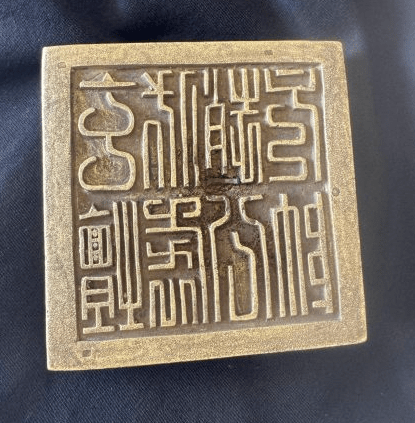
In May 2022, a copper-alloy seal bearing early Chinese inscriptions was discovered near Tortilla Flats, Northern Territory, Australia. Preliminary metallurgical and epigraphic analyses suggest the object predates any known modern or colonial Chinese presence in the region. The artefact, associated with Daoist deity worship, may indicate ancient maritime connections between Asia and northern Australia. This paper summarises the discovery, expert opinions, initial analyses, and recommendations for future study and preservation.

1. What Has Been Found

A square-shaped cast metal seal (90mm², 20g) with eight Chinese characters and two side markings, believed to represent the “Tiger-tamer Marshal Zhao of the Dark Altar” (玄壇伏虎趙公元帥)—a Daoist deity linked to wealth, protection, and navigation. The artefact bears the hallmarks of imperial-level craftsmanship, including a nine-fold casting method and complex copper-zinc alloy composition consistent with early high-temperature metallurgy.

2. Who Found It

The seal was discovered by John Miltenburg in collaboration with local researchers. The initial academic interpretation and contextual analysis were later undertaken by Ed Liu (Chinese scholar) and Ian Hudson and team, with external review and correspondence with Dr Luk Yu-ping, Curator of Chinese Paintings and Prints at the British Museum.

3. When It Was Found

The discovery occurred in early May 2022 during surface exploration of the wetlands area surrounding Tortilla Flats, Northern Territory, approximately 110 km south of Darwin.

4. Where It Was Found and in What Circumstances

The seal was recovered from wetlands heavily embedded in clay, located between two creek systems near Tortilla Flats. The location’s hydrological conditions likely preserved the artefact by limiting exposure to air and corrosive elements. There is no evidence of modern habitation, trade, or military activity in the immediate vicinity that would explain the seal’s presence through known historical channels.

5. Where the Artefact Is Now

The seal remains in the custody of the discoverer, John Miltenburg, and his research team pending formal classification, conservation assessment, and eventual submission to an approved cultural heritage repository or museum for long-term curation.

6. Expert Opinions

Dr Luk Yu-ping (British Museum): Confirmed the inscription refers to Marshal Zhao Gongming, a well-documented Daoist deity associated with wealth and protection. Such seals were used in ritual contexts, not as personal or administrative tools.

Ed Liu (Chinese Scholar): Identified the text as connected to high-ranking Taoist rites. The precision of the casting and the alloy composition suggest imperial foundry origins, possibly from Tang, Song, or Yuan dynasties (7th–14th century CE).

Geological Analyst (unnamed): Reported that the alloy composition was “remarkable,” showing advanced metallurgical knowledge inconsistent with colonial or industrial contamination.

All experts concur that the seal predates World War II and modern industrial casting technologies, supporting its classification as an ancient artefact.

7. Tests Conducted and Further Tests Recommended

Tests Already Conducted:
• Elemental Composition Analysis:
  – Copper (Cu): 66.9%
  – Zinc (Zn): 25.6%
  – Lead (Pb): 2.4%
  – Minor: Al (1.54%), Sn (1.51%), Mg (0.59%), Fe (0.76%), Si (0.17%)
  – Suggests a leaded brass alloy, consistent with imperial Chinese metallurgy.

• Microscopic Structural Review: Indicated multi-stage casting with fine-grain structure and minimal oxidation.

Recommended Tests:
1. X-Ray Fluorescence (XRF) – non-destructive verification of alloy composition.
2. Scanning Electron Microscopy (SEM) – for surface morphology and corrosion analysis.
3. Isotopic Lead Analysis – to trace ore source and possible Chinese smelting region.
4. Thermoluminescence (TL) or Metallurgical Ageing Studies – to determine approximate casting period.
5. Residue Analysis – to detect organic or ritual material traces.
6. Contextual Soil Sampling – to confirm authenticity of site deposition and eliminate relocation hypotheses.

8. Estimated Cost of Testing

Approximate research-grade costs in the UK/Australia (2025 estimates):
• XRF & SEM package: £2,000–£3,000
• Isotopic analysis: £1,500
• TL or metallurgical dating: £2,500–£4,000
• Residue analysis: £1,000
• Site sampling and carbon context testing: £2,000
Estimated total: £9,000–£12,000 for a full academic-grade scientific study.

9. Immediate Protective Measures

Until full authentication and conservation:
• Store in a temperature-stable, low-humidity environment (approx. 18°C, <40% RH).
• Use acid-free, non-reactive packaging materials (Mylar, polyethylene foam).
• Avoid cleaning, polishing, or applying any stabilisers until directed by a qualified conservator.
• Maintain chain-of-custody documentation, including photographs, provenance notes, and field coordinates.

10. Recommended Next Steps

1. Secure Provenance Certification – independent witness statements, GPS coordinates, and photographs.
2. Commission Full Laboratory Analysis – as listed above, through accredited heritage science institutions.
3. Engage with Australian and Chinese heritage authorities – for cultural classification and potential collaborative research.
4. Prepare a peer-reviewed publication outlining methodology, findings, and implications for early Sino-Australian contact.
5. Long-term conservation plan – consider transfer to a controlled museum environment once ownership and dating are confirmed.
6. Public disclosure and academic conference presentation – ideally at the Australasian Archaeometry Conference or Society for East Asian Archaeology.

Conclusion

The Tortilla Flats seal is a potentially transformative artefact in understanding pre-modern transoceanic interactions. If authenticated as pre-European, its existence in Australia implies early Chinese maritime reach or religious diffusion far beyond current historical models. Urgent preservation and rigorous interdisciplinary study are required to confirm its origins, cultural significance, and potential impact on the global history of navigation and trade.

Read More